 by
by Cahal Pech is a compact hilltop Maya palace perched directly above San Ignacio, and it is one of the oldest known Maya sites in western Belize, with evidence of settlement dating back to roughly 1200 BC. Walkable from town in about 20 minutes, its tightly clustered courtyards, temples, and small museum make it an easy, rewarding stop. This guide covers Cahal Pech and the smaller Cayo sites worth knowing.
Key Takeaways
- Cahal Pech sits on a hill above San Ignacio and was first settled around 1200 BC, making it an important Early to Middle Preclassic site.
- The site is walkable from downtown San Ignacio, ideal for a short half-day visit.
- Its 34 structures are packed around a central acropolis, with the tallest temple reaching about 25 meters.
- El Pilar, straddling the Belize–Guatemala border, is a large forest-garden site pioneering "archaeology under the canopy."
- The Cayo District pairs these smaller sites with famous neighbors like Xunantunich and Caracol.
What Is Cahal Pech and Why Does It Matter?
Cahal Pech, meaning "Place of the Ticks" in Yucatec Maya, earned its unglamorous name in the 1950s when the hilltop was used as cattle pasture. Look past the label and you find one of the most archaeologically significant sites in the region.
Excavations, notably those directed by Dr. Jaime Awe between 1988 and 2000, revealed continuous habitation dating to around 1200 BC, during the Early Middle Preclassic period. That makes Cahal Pech one of the oldest recognizably Maya settlements in western Belize, occupied for nearly two thousand years before being abandoned around AD 900.
The site functioned as a palatial, hilltop home for an elite Maya family. Its position overlooking the confluence of the Macal and Mopan Rivers gave its rulers a commanding view of the valley below.
What You'll See at the Site
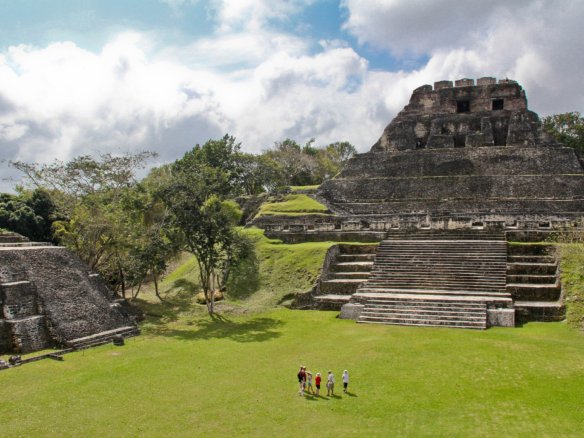
Cahal Pech is small but dense. Its 34 structures are arranged around a central acropolis, with courtyards and temples pressed tightly together, connected by narrow passages and stairways.
- The acropolis and plazas — compact courtyards that feel like a private residence rather than a grand ceremonial center.
- Temples — the tallest rises roughly 25 meters, offering shaded stone architecture wrapped in jungle.
- The on-site museum — a small building displaying artifacts recovered during excavations, providing context before you explore.
How Do You Visit Cahal Pech from San Ignacio?
Accessibility is Cahal Pech's greatest advantage. The site sits on the southwestern edge of San Ignacio, and reaching it is refreshingly simple.
- On foot: The uphill walk from downtown takes roughly 20 to 30 minutes. It is a pleasant stroll for reasonably fit visitors.
- By taxi: A short, inexpensive ride if you prefer to skip the climb.
- Time needed: Allow one to two hours. The compact layout means you can see everything without rushing.
There is a modest entrance fee payable at the visitor center, and the museum is included. Early morning visits offer cooler temperatures and quieter courtyards. Bring water, sturdy shoes, and insect repellent, as the jungle setting lives up to the site's name.
Because it is so close to town, Cahal Pech pairs naturally with a stay in San Ignacio, the hub of Belize's Cayo District and a launch point for the region's larger ruins.
What Other Small Cayo Sites Are Worth Knowing?
Beyond Cahal Pech, the Cayo District hides several lesser-visited sites. Each offers a different flavor of Maya archaeology, from forest-garden conservation to quiet rural mounds.
| Site | Distance from San Ignacio | Highlight |
|---|---|---|
| Cahal Pech | Walkable (edge of town) | Early Preclassic hilltop palace and museum |
| El Pilar | ~12 km north | Large border-straddling site, forest-garden archaeology |
| Nohoch Ek | ~15 km southwest | Small, quiet residential ruin near Barton Creek |
| Xunantunich | ~13 km west | Towering El Castillo pyramid |
| Caracol | ~85 km south | Belize's largest Maya city, jungle setting |
El Pilar: Archaeology Under the Canopy
El Pilar is the standout among the smaller sites. Located about 12 kilometers north of San Ignacio near Bullet Tree Falls, it straddles the Belize–Guatemala border and spans roughly 120 acres, with over 25 plazas and hundreds of buildings.
Archaeologist Anabel Ford first mapped El Pilar in 1983 and has championed a philosophy called "archaeology under the canopy." Rather than clearing the forest to expose bare stone, monuments are deliberately left sheltered beneath the trees. Ford's team also revived the ancient practice of Maya forest gardens, working with local farmers to demonstrate sustainable land use. It is as much a living landscape as an archaeological reserve.
Nohoch Ek and the Bigger Neighbors
Nohoch Ek is a small, seldom-visited residential site southwest of San Ignacio, appealing mainly to travelers who want solitude and a sense of discovery.
For grander architecture, the Cayo District's headline ruins are close at hand. Xunantunich, reached by a hand-cranked ferry across the Mopan River, is crowned by the towering El Castillo pyramid. Caracol, deeper in the Chiquibul Forest, was one of the most powerful Maya cities in the region. Both make excellent day trips alongside the smaller sites.
Why Combine Cahal Pech with the Region's Larger Ruins?
Visiting Cahal Pech first gives valuable context. Its early dates and intimate, residential scale show how a Maya center began, while the monumental architecture of nearby sites shows how the civilization grew.
A well-rounded Cayo itinerary might look like this:
- Day one: Walk to Cahal Pech in the morning; explore San Ignacio's market and town in the afternoon.
- Day two: Visit Xunantunich & El Castillo, or head north to El Pilar for forest-garden trails.
- Day three: Take the long but spectacular drive to Caracol.
Together these sites form the heart of The Maya Ruins of Belize experience, all within reach of a single base in San Ignacio.
Frequently Asked Questions
Is Cahal Pech really walkable from San Ignacio?
Yes. The site sits on a hill at the edge of town, about a 20 to 30 minute uphill walk from the center. Taxis are also cheap and quick if you prefer not to climb.
How old is Cahal Pech?
Excavations indicate settlement dating to around 1200 BC, during the Early Middle Preclassic period, making it one of the oldest recognizably Maya sites in western Belize.
What does "Cahal Pech" mean?
It translates to "Place of the Ticks" in Yucatec Maya, a name assigned in the 1950s when the hilltop was used as pasture.
Is El Pilar worth visiting?
Yes, if you enjoy nature and quiet. El Pilar is a large, forested site with unique "archaeology under the canopy" and Maya forest gardens, offering a very different experience from cleared ruins.
Do I need a guide?
A guide is optional at Cahal Pech but enriches the visit. At larger or more remote sites like Caracol, a guided tour is recommended for both context and logistics.
How much time should I budget?
Allow one to two hours for Cahal Pech, and a half to full day each for El Pilar, Xunantunich, or Caracol.
Conclusion
Cahal Pech proves that some of Belize's most important Maya history sits right on San Ignacio's doorstep. Compact, ancient, and easy to reach, it is the perfect introduction to the ruins of the Cayo District, from the forest gardens of El Pilar to the towering pyramids of Xunantunich and Caracol.
If exploring this region has you dreaming of a longer stay, discover homes and land near San Ignacio and the Cayo District on Habvia, the MLS marketplace for Central American real estate. Tropical Real Estate Redefined.