 by
by 
Scuba diving and snorkeling in Belize means exploring the UNESCO-listed Belize Barrier Reef, a living wonder stretching more than 185 miles down the Caribbean coast. It is the largest reef system in the Northern Hemisphere and the second-largest on Earth after Australia's. From the shallow flats of Shark Ray Alley to the abyss of the Great Blue Hole, few places pack this much marine variety into one warm, accessible destination.
Key Takeaways
- The Belize Barrier Reef spans 185+ miles and forms a UNESCO World Heritage Site with roughly 400 cayes, three atolls, and seven marine reserves.
- Beginners and snorkelers thrive at Hol Chan Marine Reserve and Shark Ray Alley; advanced divers chase walls, atolls, and the Great Blue Hole.
- The three atolls, Turneffe, Lighthouse Reef, and Glover's Reef, deliver Belize's most dramatic wall and offshore diving.
- Whale sharks gather seasonally at Gladden Spit near Placencia, generally March through June around the full moon.
- The dry season (roughly November to April) offers the calmest seas and best visibility, though diving is excellent year-round.
Why Is the Belize Barrier Reef So Special?
The Belize Barrier Reef Reserve System earned UNESCO World Heritage status in 1996 for its extraordinary biodiversity. The reef and its associated ecosystems shelter hundreds of fish species, sea turtles, rays, and vast fields of hard and soft coral.
What makes Belize unique is the range of habitats within easy reach. In one trip you can drift over turtle grass, hover along a sheer coral wall, and descend into a legendary sinkhole. Water stays warm year-round, high 70s Fahrenheit from December to April and low 80s from May to November, so a light 3mm wetsuit is usually plenty.
Diving here is a highlight in any list of Things to Do in Belize, and the reef is inseparable from the character of The Islands & Cayes of Belize that line it.
What Are the Top Dive and Snorkel Sites in Belize?
Belize rewards every experience level. The table below maps the marquee sites to their location and signature draw.
| Site | Location | Highlight |
|---|---|---|
| Hol Chan Marine Reserve | Near San Pedro, Ambergris Caye | Reef channel packed with fish, turtles, and rays |
| Shark Ray Alley | Southern tip of Ambergris Caye | Snorkel with nurse sharks and southern stingrays |
| Mexico Rocks | Northern Ambergris Caye | Shallow coral patches, ideal for beginners |
| Great Blue Hole | Lighthouse Reef Atoll | Iconic sinkhole with stalactites at depth |
| Turneffe Atoll | East of Belize City | Walls, coral gardens, and swim-throughs |
| Glover's Reef | Southern atoll | Remote lagoon and pristine outer-rim walls |
| South Water Caye | Central barrier reef | Spur-and-groove reef and diverse marine life |
| Gladden Spit | Off Placencia | Seasonal whale sharks during fish spawning |
Hol Chan Marine Reserve & Shark Ray Alley
Just off San Pedro, Hol Chan ("little channel" in Maya) is Belize's most beloved reserve, roughly seven square miles of reef, seagrass, and mangrove. Dense schools of snapper, grouper, green morays, turtles, and rays gather in the cut. Nearby, Shark Ray Alley lets snorkelers float among gentle nurse sharks and stingrays in shallow, sunlit water. Both are easy day trips from Ambergris Caye and Caye Caulker.
Mexico Rocks
North of San Pedro, Mexico Rocks is a maze of coral heads in calm, shallow water. Its gentle conditions make it a favorite for first-time snorkelers, families, and open-water students building confidence.
The Three Atolls
Belize is one of only a handful of places on Earth with true coral atolls. Turneffe Atoll, the largest, mixes mangrove lagoons with steep walls and canyons draped in barrel sponges. Lighthouse Reef is home to the Great Blue Hole and the pristine wall diving of Half Moon Caye, where divers meet hawksbill turtles, eagle rays, and blacktip sharks. Glover's Reef, the most remote, offers uncrowded patch reefs and dramatic drop-offs.
The Great Blue Hole
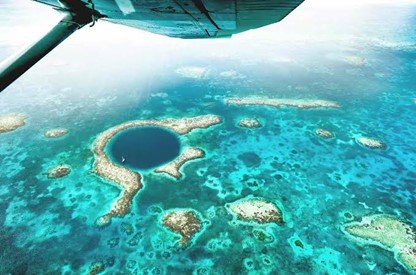
This near-perfect circular sinkhole in Lighthouse Reef measures over 400 feet deep and about 1,000 feet across. Divers typically descend to around 130 feet to weave among ancient stalactites, with the bright opening glowing overhead like a second sky. It is an advanced, bucket-list dive; read more in our dedicated guide to The Great Blue Hole.
South Water Caye & Gladden Spit
Toward the south, South Water Caye Marine Reserve protects a stretch of classic spur-and-groove reef with walls and healthy coral. Nearby, Gladden Spit becomes a global draw each spring when spawning snapper attract whale sharks, the ocean's largest fish.
Snorkeling vs. Diving: Which Is Right for You?
You do not need a scuba certification to experience the reef. Belize is one of the best snorkeling destinations anywhere.
- Snorkeling suits families, non-swimmers building confidence, and travelers short on time. Hol Chan, Shark Ray Alley, Mexico Rocks, and Caye Caulker's Split deliver vivid encounters in shallow water.
- Scuba diving unlocks the walls, atolls, swim-throughs, and depth of the Great Blue Hole, plus longer, closer time with larger marine life.
Many operators run combined trips, so a snorkeling partner and a diving partner can share the same boat and the same reef.
When Is the Best Time to Dive in Belize?
Belize dives well all year, but conditions shift with the seasons.
Seasons and Visibility
- Dry season (roughly late November to April): Calmest seas, lightest winds, and the best visibility, commonly 40 to 80 feet on the reef and clearer at the offshore atolls. This is prime time for the Great Blue Hole and long boat rides to Lighthouse Reef.
- Green season (May to November): Warmer water and lush conditions, with occasional rain. Diving remains excellent, though wind and the late-season hurricane window (peaking August to October) can affect atoll access.
Whale Shark Season
Whale sharks generally appear at Gladden Spit from March through June, concentrated around the full moon when snapper spawn. For 2026, operators highlight windows around the April 1, May 1, and May 31 full moons. Sightings are never guaranteed, but the surrounding reef diving off Placencia is superb regardless.
What Marine Life Will You See?
Belize's reef is a nonstop parade of color and movement. Expect:
- Sharks and rays: Nurse sharks, Caribbean reef sharks, southern stingrays, and spotted eagle rays.
- Turtles: Green, hawksbill, and loggerhead turtles grazing the seagrass.
- Reef fish: Parrotfish, angelfish, snapper, grouper, barracuda, and green moray eels.
- Seasonal giants: Whale sharks at Gladden Spit and, on lucky days, dolphins and manatees near the cayes.
Where Should You Base Your Dive Trip?
Your home base shapes the whole experience.
Ambergris Caye (San Pedro)
Belize's largest island is the most developed dive hub, with abundant resorts, restaurants, nightlife, and dive shops. It sits minutes from Hol Chan, Shark Ray Alley, and Mexico Rocks, with day trips to the atolls. Learn more in our guide to Ambergris Caye.
Caye Caulker
Smaller and famously laid-back, Caye Caulker ("go slow") offers the same reef access at a more relaxed, budget-friendly pace, popular with backpackers and independent travelers.
Placencia
This southern peninsula is the gateway to Gladden Spit, Glover's Reef, and South Water Caye, with fewer crowds plus easy access to jungle and Maya sites inland. It is the top choice for whale shark season.
How Do You Choose a Dive Operator and Get Certified?
Belize is a welcoming place to learn or to log advanced dives.
- Certification: Most shops offer PADI or SSI courses, from Discover Scuba half-days to full Open Water certification. The Great Blue Hole and atoll trips typically require Advanced Open Water experience.
- Choosing an operator: Look for well-reviewed shops, small group sizes, current safety and insurance standards, and respect for marine reserve rules and park fees.
- Responsible diving: Practice good buoyancy, never touch coral or wildlife, and use reef-safe sunscreen to help protect this fragile UNESCO ecosystem.
Frequently Asked Questions
Do I need to be a certified diver to enjoy the Belize reef?
No. Snorkeling at Hol Chan, Shark Ray Alley, and Mexico Rocks brings you face to face with turtles, rays, and sharks in shallow water. Non-divers can also try a supervised Discover Scuba session before committing to full certification.
Is the Great Blue Hole worth it for divers?
Yes, as a bucket-list experience. It is an advanced dive prized for its stalactites, depth, and sheer scale rather than dense marine life. Most operators require Advanced Open Water certification and calm conditions.
When can I swim with whale sharks in Belize?
Whale sharks typically visit Gladden Spit near Placencia from March through June, clustered around the full moon. April and May are historically the most reliable months, though sightings are always subject to nature.
What is water visibility like on the reef?
Reef visibility commonly runs 40 to 80 feet and is often clearer at the offshore atolls, especially during the dry season from late November to April.
Which base is best for diving, Ambergris Caye or Placencia?
Ambergris Caye offers the easiest access to Hol Chan and the most amenities, while Placencia is the launch point for whale sharks and southern atolls. Caye Caulker splits the difference with a relaxed, affordable vibe.
Is it safe to dive in Belize year-round?
Yes, with seasonal planning. The dry season brings the calmest seas, while the green season stays warm and lush; just watch the August-to-October hurricane window for atoll trips.
Conclusion
Few destinations rival Belize for accessible, world-class diving and snorkeling, from beginner-friendly reserves to the storied Great Blue Hole and seasonal whale sharks. For many visitors, one trip to this reef sparks a bigger dream: waking up to that turquoise water every day. Dreaming of living steps from the reef? Explore island and coastal homes for sale on Habvia, the MLS marketplace for Central America, where tropical real estate is redefined.